
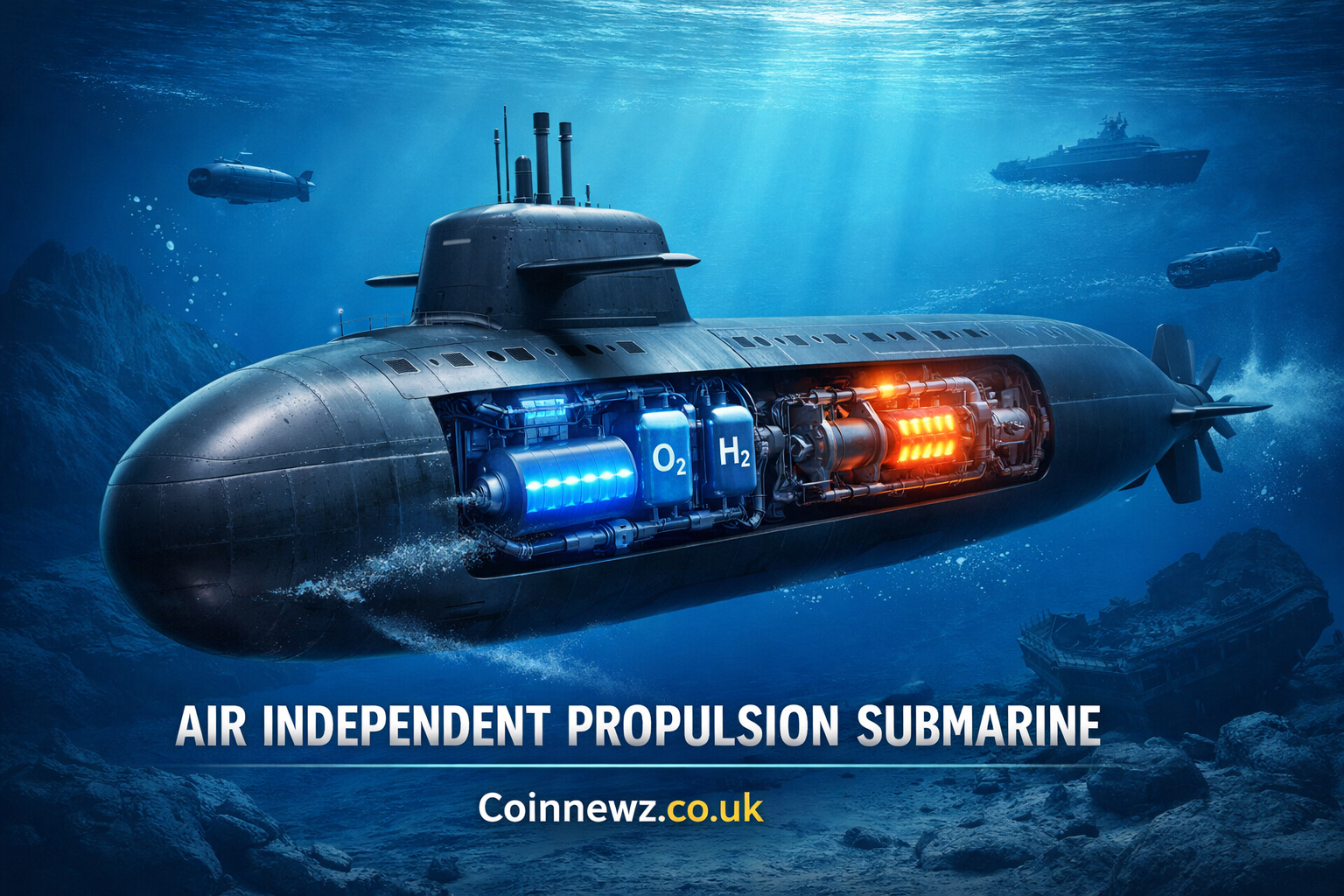
air independent propulsion: How Modern Submarines Stay Hidden for Longer
Submarines have always relied on stealth to carry out missions beneath the ocean’s surface. One of the most revolutionary technologies enabling this stealth is air independent propulsion. This advanced system allows submarines to operate underwater for extended periods without surfacing for oxygen, dramatically improving endurance and survivability.
In modern naval warfare, stealth and endurance are critical. Diesel-electric submarines traditionally needed to surface or use a snorkel frequently to recharge batteries. However, with air independent propulsion, submarines can remain submerged for days or even weeks. This innovation has transformed naval strategy and submarine design across the world.
In this article, we’ll explore how air independent propulsion works, its advantages, different technologies used in AIP systems, and its future role in underwater warfare.
What Is Air Independent Propulsion?
Air independent propulsion is a submarine propulsion technology that allows non-nuclear submarines to operate underwater without access to atmospheric oxygen. Traditional diesel engines require oxygen to function, forcing submarines to surface regularly.
With AIP systems, submarines can generate power underwater using alternative methods that do not require external air. This allows them to remain submerged longer while maintaining low acoustic and thermal signatures.
The concept was developed to bridge the gap between conventional diesel-electric submarines and nuclear-powered submarines. Nuclear submarines can stay underwater for months, but they are extremely expensive. AIP offers a cost-effective alternative with improved endurance.
Several modern submarines, including those used by European and Asian navies, rely on this technology to enhance underwater capabilities.
How AIP Systems Generate Power
Different technologies can be used to produce energy underwater. Most systems rely on stored oxygen combined with other fuels.
Common power generation methods include:
- Fuel cell technology
- Stirling engines
- Closed-cycle diesel engines
- Steam turbine systems
Each method provides electricity to power the submarine’s electric motors and onboard systems while remaining submerged.
Why Submarines Need AIP Technology
Conventional submarines historically faced a major limitation: they needed oxygen to run diesel engines. This meant surfacing regularly, which increased the risk of detection by enemy radar, satellites, or patrol aircraft.
By incorporating air independent propulsion, submarines gain several strategic advantages.
First, they can remain underwater for longer periods. This increases operational range and mission flexibility.
Second, stealth improves significantly. Surfacing is one of the most vulnerable moments for a submarine. Avoiding this step reduces the chance of detection.
Third, AIP-powered submarines are quieter than many traditional propulsion systems. Reduced noise signatures make them harder for sonar systems to detect.
Because of these benefits, many navies now prioritize submarines equipped with air independent propulsion for coastal defense and strategic patrol missions.
Major Types of AIP Systems Used Today
Different countries have developed unique approaches to AIP technology. Each system has its own strengths depending on mission requirements and submarine design.
Stirling Engine Systems
The Stirling engine is one of the earliest and most widely used AIP technologies. It works by using liquid oxygen and diesel fuel to generate heat. This heat drives pistons that produce mechanical energy.
Swedish submarines were among the first to adopt this system, which is known for reliability and quiet operation.
Fuel Cell Systems
Fuel cell technology is another advanced form of AIP. It combines hydrogen and oxygen to produce electricity, water, and heat. This process is extremely efficient and generates very little noise.
Fuel cells are widely used in modern submarines because they produce steady electrical power while maintaining stealth. Some of the latest European submarines rely heavily on fuel cell-based air independent propulsion systems.
Advantages of Air Independent Propulsion in Naval Warfare
The adoption of air independent propulsion has significantly changed the capabilities of conventional submarines. Navies around the world consider AIP-equipped vessels highly valuable assets.
One major advantage is extended underwater endurance. Instead of surfacing every few hours, submarines can remain submerged for several days or weeks.
Another advantage is improved stealth. Without frequent snorkeling, submarines reduce exposure to radar detection and satellite surveillance.
Operational flexibility is also enhanced. AIP submarines can patrol contested waters, conduct intelligence missions, and monitor shipping lanes more effectively.
Cost efficiency is another key factor. Compared with nuclear submarines, AIP submarines are much cheaper to build and maintain. This allows smaller naval forces to deploy advanced underwater capabilities without massive budgets.
Challenges and Limitations of AIP Technology
Despite its benefits, air independent propulsion does have limitations.
One limitation is power output. AIP systems generally produce less power than diesel engines or nuclear reactors. As a result, submarines using AIP usually travel at slower speeds when operating on this system.
Another challenge involves fuel storage. Liquid oxygen, hydrogen, or other fuels must be stored onboard safely. Managing these materials requires specialized engineering and safety procedures.
Maintenance and system complexity can also increase costs over time. While still cheaper than nuclear propulsion, AIP submarines require advanced technology and training.
Even with these limitations, air independent propulsion remains one of the most significant advancements in conventional submarine technology.
The Future of AIP and Submarine Technology
The future of submarine warfare is likely to include continued development of air independent propulsion technologies.
Researchers are currently working on more efficient fuel cells, improved energy storage systems, and hybrid propulsion methods. Combining AIP with advanced lithium-ion batteries may allow submarines to operate underwater for even longer periods.
Autonomous underwater vehicles and next-generation submarines may also use similar technologies for extended missions.
As global maritime competition increases, navies will continue investing in stealth capabilities. In this context, air independent propulsion will remain a crucial innovation for non-nuclear submarines seeking greater endurance and survivability beneath the ocean.
FAQ’s
What is air independent propulsion in submarines?
Air independent propulsion is a technology that allows submarines to operate underwater without using atmospheric oxygen, enabling them to stay submerged longer.
How long can AIP submarines stay underwater?
Depending on the system and submarine design, AIP-equipped submarines can remain submerged for several days or even weeks without surfacing.
Is AIP better than nuclear propulsion?
AIP is not more powerful than nuclear propulsion, but it is significantly cheaper and still provides improved endurance compared to traditional diesel-electric submarines.
Which countries use AIP submarines?
Many countries operate submarines with AIP systems, including Germany, Sweden, Japan, South Korea, and several other naval powers.
Why is AIP important for stealth?
AIP reduces the need for submarines to surface or snorkel, which lowers the risk of detection by radar, satellites, and enemy patrol aircraft.
Conclusion:
Submarine technology continues to evolve as nations invest in stealth, endurance, and advanced propulsion systems. Air independent propulsion represents one of the most important innovations for conventional submarines, enabling them to stay underwater longer while remaining quiet and difficult to detect.
Although it does not completely replace nuclear propulsion, AIP provides a powerful and cost-effective alternative for many naval forces. As research progresses and new energy systems emerge, the capabilities of AIP submarines will continue to improve.
With increasing global maritime competition, technologies like air independent propulsion will remain essential in shaping the future of underwater defense and naval strategy.
Meta Description:
Learn how air independent propulsion works in modern submarines, its advantages, technologies, and role in naval warfare. A complete guide to AIP systems.