The Echoes of Unspoken Love: Exploring the Deep Emotional Architecture and Color-Coded Psychology of The Unsent Project
The human heart is an intricate reservoir of unspoken words, unfulfilled promises, and silent confessions that never quite find their way to the surface. Millions of people walk around carrying heavy mental drafts—sentences crafted in the quiet of the night, meant for someone who is no longer there, yet destined to remain trapped inside the digital void of a notes application or a forgotten thought.
It was this universal truth of human vulnerability that inspired the creation of the unsent project, an innovative, anonymous digital art platform that has revolutionized how the modern world processes grief, romantic nostalgia, and the lingering ghosts of first love.
Originally launched as a conceptual art piece, the unsent project has grown organically into a massive global archive containing millions of raw, unfiltered text submissions from individuals around the world. The core concept behind the unsent project is beautifully simple: it invites anyone to submit a text message that they desperately wish they could send to their first love, but for one reason or another, never will.
To complete the submission, the user must provide the name of the recipient and select a specific background color that they visually associate with that person or the relationship itself. The result is a sprawling, searchable, color-coded kaleidoscope of human emotion that serves as an emotional graveyard, a sanctuary of healing, and a profound psychological mirror all at once.
To truly comprehend why the unsent project has struck such a powerful chord within contemporary internet culture, one must look past the simple interface of the website and dive into the deep psychological undercurrents of why we keep secrets, why we struggle to achieve closure,
and how the synthesis of color and language allows the human psyche to heal. Through an extensive exploration of its historical origins, artistic intentions, emotional mechanics, and cultural significance, this article unpacks the complex tapestry of the unsent project and explains why its quiet digital revolution continues to captivate millions.
The Genesis of an Idea: How Rora Blue Created a Global Sanctuary for the Brokenhearted
Every major cultural phenomenon begins with a question, and for the unsent project, that question was posed by its creator, the visionary multidisciplinary artist Rora Blue. In 2015, while exploring the intersections of human connection, text-based art, and the complex relationship between visual color and raw human emotion, Blue decided to create a conceptual project for her university thesis at Arizona State University. She was deeply fascinated by how people internalize memories and wondered if there was a collective human pattern when it came to visualizing love. Specifically, she wanted to investigate: What color do people see love in?
To find an answer, Rora Blue posted a simple, open prompt on her blog and social media platforms, inviting strangers to anonymously submit the exact text messages they never sent to their very first loves. Alongside the text, she required them to choose a color that instantly came to mind when they thought of that specific person. At the time, Blue expected perhaps a few dozen or a few hundred responses from friends, classmates, and acquaintances. She never could have anticipated that within days, the prompt would go completely viral on platforms like Tumblr, prompting thousands of submissions to pour in overnight from every corner of the earth.
What started as a temporary, experimental art installation quickly transformed into a permanent, living digital archive. As the years progressed, the platform expanded exponentially, transforming the unsent project from a modest university assignment into a massive cultural database that holds over 5 million submissions. The staggering volume of responses proved a fundamental psychological truth: the world is full of people who are desperate to be heard, even if they must speak from behind a heavy veil of complete anonymity. By creating the unsent project, Rora Blue inadvertently designed a global, digital confession booth—a safe space where the heavy weight of unspoken truth could finally be laid to rest without the fear of real-world consequences, confrontation, or rejection.
The Core Mechanics of The Unsent Project: How a Confession is Born
The enduring allure of the unsent project lies heavily in its minimalist, zero-friction user design. The platform removes all traditional barriers to entry, refusing to collect email addresses, phone numbers, IP locations, or social media handles. This absolute commitment to user privacy creates an impenetrable shield of anonymity, which in turn coaxes out the absolute, unfiltered truth from the submitter. When someone visits the official The Unsent Project Website, they are greeted by an uncomplicated form that requires only three key pieces of information to create a post:
- The Name of the Recipient: This is typically the first name, nickname, or initial of the submitter’s first love, ex-partner, or estranged friend.
- The Unsent Message: This is the core body of the submission—the exact words, ranging from a single fragmented sentence to a short, poignant paragraph, that were never delivered to the target individual.
- The Color Selection: The submitter must select a specific hue from a curated color wheel that perfectly encapsulates the emotional tone or visual memory of the relationship.
Once the user clicks the final button, the submission is immediately integrated into the massive digital grid of the unsent project. The text is formatted to look exactly like a real digital text message, overlaid seamlessly onto the exact background color chosen by the user. From there, it is cast out into the digital ocean of the unsent project archive, where it becomes instantly searchable by anyone looking up a specific name, keyword, or color palette. This simple workflow turns the intensely private act of writing an unsent letter into a collective, public ritual of emotional release.
The Synesthesia of Love: Analyzing the Emotional Spectrum of the Color Archive
One of the most scientifically and artistically fascinating aspects of the unsent project is its profound exploration of color psychology and emotional synesthesia. Synesthesia is a neurological condition where the stimulation of one sensory pathway leads to involuntary experiences in a second sensory pathway—such as seeing colors when feeling specific emotions. By forcing users to assign a visual shade to their memories of first love, the unsent project acts as a massive data-mining experiment regarding how the human brain cross-wires romance, grief, anger, and nostalgia with the visual spectrum.
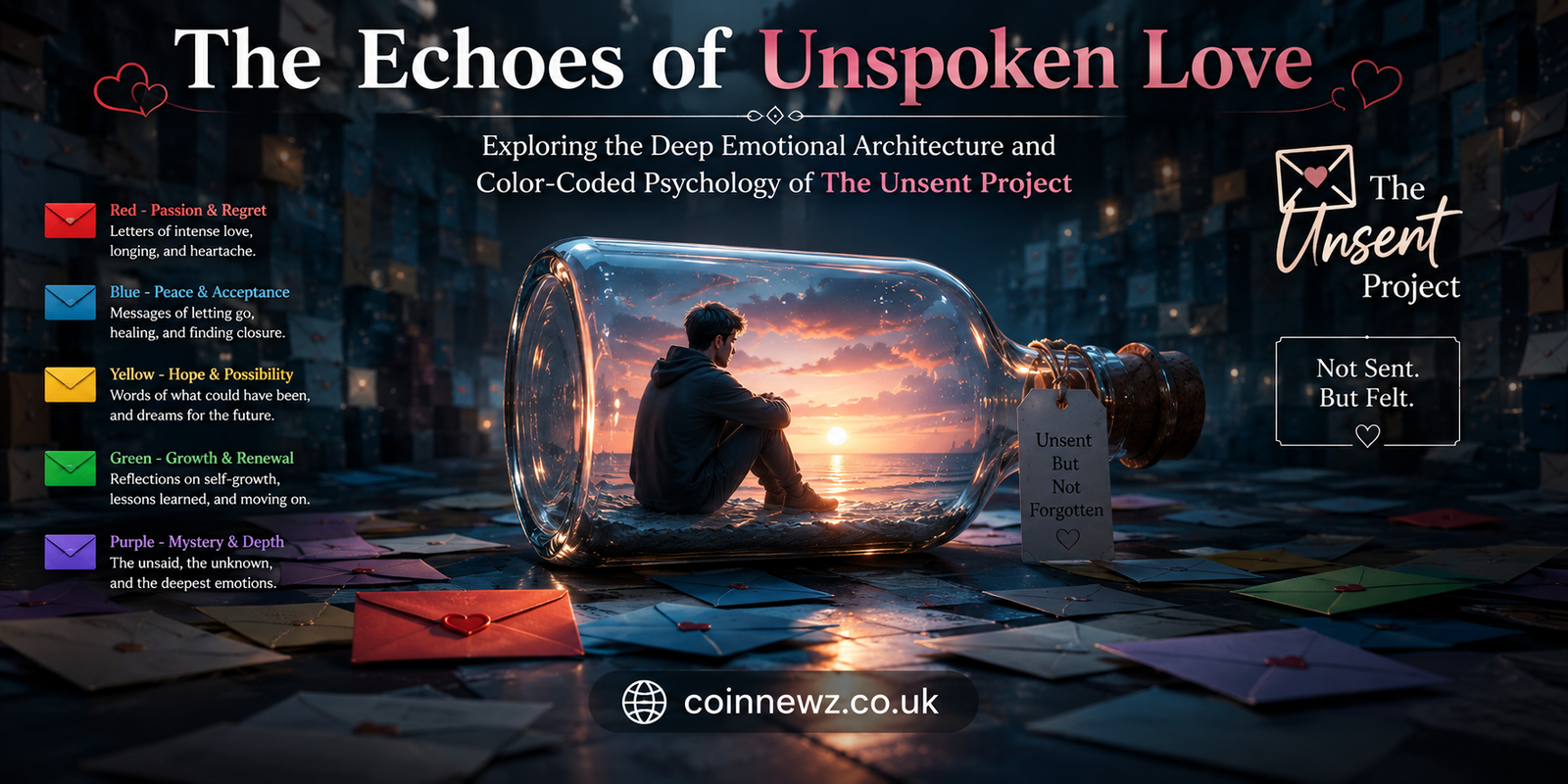
Over the years, as millions of entries have accumulated within the unsent project archive, distinct patterns have emerged. Rora Blue and cultural data analysts have noted a striking correlation between the specific colors chosen by users and the precise emotional tone of the unsent messages written upon them. The digital landscape of the unsent project can be effectively mapped across several primary color categories, each representing a unique facet of the human romantic experience:
The Dominance of Saturated Blue: Trust, Serenity, and Tragic Permanence
In statistical evaluations of the unsent project, variations of the color blue are consistently selected more than almost any other color on the wheel. Within the context of the unsent project archive, blue does not merely represent basic sadness or depression; rather, it often embodies a profound sense of deep, enduring love, unwavering trust, and the painful beauty of a connection that was pure but ultimately unsustainable. The messages written on blue backgrounds frequently express a gentle, aching wish for the other person’s happiness, reflecting a mature form of closure where the love remains even though the relationship has ended. It represents a calm, oceanic depth of feeling—a love that is permanent, quiet, and deeply ingrained in the submitter’s identity.
The Vibrancy of Red: Passion, Unresolved Trauma, and Intense Longing
Red is the second most common color utilized across the unsent project submissions. As a high-intensity color, red serves as the perfect visual canvas for messages that crackle with unresolved energy. Within the unsent project, red tiles typically house text that deals with overwhelming passion, burning regret, agonizing betrayal, or an intense, magnetic longing that the submitter cannot seem to shake. It is the color of words written in a sudden flash of anger, or messages that confess a desperate desire to run back into the arms of an ex-lover, despite knowing the relationship was inherently toxic. Red blocks out the noise and demands to be seen, mirroring the volatile nature of a first love that burned too bright and burned out too fast.
The Softness of Pink: Innocent Nostalgia, Sweetness, and Gentle Regret
Pink tiles represent the gentler, sweeter, and more vulnerable side of the unsent project archive. These submissions are frequently dedicated to high school sweethearts, childhood crushes, or those brief, magical “situationships” that ended before they ever had a chance to go wrong. The emotional tone here is heavily rooted in innocent nostalgia. Messages on pink backgrounds often read like fond diary entries, thanking the recipient for teaching them how to love, or softly wondering if the other person ever thinks about the quiet moments they once shared on warm summer nights. It is a safe, soft harbor within the unsent project where anger is entirely absent, replaced instead by the tender, melancholic warmth of a beautiful memory.
The Somberness of Black and Dark Grey: Grief, Finality, and the Pain of Separation
When browsing the unsent project archive, encountering a cluster of black or dark grey blocks can feel emotionally jarring. These dark backgrounds are almost exclusively reserved for messages that deal with absolute finality, profound grief, and the agonizing process of letting go. Many of the black tiles within the unsent project are addressed to first loves who have tragically passed away, making the platform a digital memorial space for the bereaved. Other times, black signifies a love that ended in complete, devastating heartbreak—where the connection was shattered so completely that the submitter feels a sense of emotional death. The words on these tiles are heavy, stark, and final, offering a chillingly honest look at the absolute bottom of human sorrow.
The Radiance of Yellow and Orange: Friendship, Gratitude, and Platonic Love
While Rora Blue initially framed the unsent project around the concept of a romantic “first love,” the global community quickly expanded this definition to include all forms of foundational love. Yellow and orange tiles within the unsent project archive frequently represent platonic love, chosen family, and deep-seated gratitude. These are messages sent to childhood best friends from whom the submitter has grown apart, siblings who saved them during difficult times, or mentors who changed the trajectory of their lives. Yellow represents warmth, sunlight, and a cheerful celebration of a bond that, while no longer active, still brings immense joy to look back upon.
The Digital Mirror: Why Millions Search Their Own Names in the Color Archive
While the act of submitting a message to the unsent project is deeply therapeutic, there is a secondary cultural phenomenon driven by the platform that is arguably even more compelling: the act of searching the archive. Because the unsent project allows users to look up any name via its centralized digital search bar, the website has become a modern, digital oracle where millions of internet users go to look up their own names.
This specific behavior taps into a deep, universal human craving for validation, curiosity, and the desire to know how we have impacted the lives of others. Every day, thousands of people type their own names into the unsent project database, scrolling through thousands of color-coded squares, wondering if one of those anonymous messages was secretly written for them.
Did my ex-boyfriend write that blue note?
Is that red message from the girl I sat next to in college chemistry?
Does someone, somewhere out there in the vastness of the world, still harbor a secret, burning love for me?
This search process creates a fascinating psychological paradox. Because the submissions are completely anonymous, a person searching their name can almost never verify with absolute certainty that a specific message was intended for them. Yet, the human mind is an expert at pattern recognition and narrative building. If a user named “Emily” finds a light blue message that says, “I still remember the song you played on our drive to the beach in 2019,” and she happens to have a vivid memory matching that exact description, her brain instantly bridges the gap.
In this way, the unsent project archive functions as a massive, interactive Rorschach test. It allows individuals to project their own desires, guilfts, and hopes onto anonymous text, finding a strange, comforting sense of closure or validation from a stranger’s words. It provides a beautiful, haunting way to find belonging in an otherwise cold and disconnected digital landscape.
Direct Comparison: How The Unsent Project Differs from Traditional Communication Platforms
To fully comprehend the structural utility of the unsent project, it is helpful to contrast it against the traditional communication channels that dominate our daily digital lives, such as standard texting apps or mainstream social media platforms.
| Feature / Metric | Traditional Texting (SMS/WhatsApp) | Mainstream Social Media (Instagram/X) | The Unsent Project Archive |
| Primary Audience | A specific, targeted individual | A broad network of followers/public | An anonymous global community |
| Identity Verification | Tied to a verified phone number | Requires profiles, handles, or emails | Completely anonymous; no registration |
| Risk of Rejection | Extremely high (Read receipts, ghosting) | Moderate (Public judgment, lack of engagement) | Zero; no direct reply mechanism exists |
| Visual Layering | Standard text bubbles (System fonts) | Images, videos, algorithm-driven feeds | Pure color-block synesthesia |
| Core Emotional Value | Real-time logistics, direct communication | Curation of an idealized, superficial self | Raw, cathartic, unfiltered confession |
| Search Functionality | Internal search within private chats | Keyword hashtags, user profile searches | Searchable by name, color, and intent |
The Therapeutic Power of the Unsent Letter: A Psychological Analysis
The underlying concept of the unsent project is not entirely new; rather, it is a brilliant digital modernization of a time-tested psychotherapeutic technique known as “the unsent letter technique.” For many decades, clinical psychologists, grief counselors, and marriage and family therapists have instructed patients to write letters to people who have caused them pain, people they have lost, or people they still long for—with the strict condition that the letter must never actually be mailed or delivered.
Why is this practice so incredibly effective, and why does the unsent project act as such a powerful engine for mental health stabilization? The answer lies in the psychological concepts of emotional externalization, uninhibited expression, and cognitive processing.
1. The Removal of the Anticipated Reaction
When we communicate with someone in the real world, our brains are constantly running complex simulations of how that person will react to our words. We worry about their judgment, their anger, their potential to reject us, or their indifference. This fear of the recipient’s reaction forces us to censor ourselves. We edit our thoughts, hold back our true feelings, and mask our vulnerabilities to protect our ego.
By guaranteeing that the message will never reach the recipient, the unsent project completely removes the anticipated reaction from the equation. The submitter is suddenly freed from the shackles of social anxiety. They do not have to worry about looking desperate, sounding weak, or breaking a boundary. They can finally speak with absolute, unadulterated honesty.
2. Cognitive Structuring of Chaotic Emotions
Trauma, heartbreak, and unfulfilled longing often exist within the human mind as a chaotic, swirling storm of abstract feelings. When these emotions are kept trapped in the brain, they can cause chronic anxiety, rumination, and emotional stagnation. The physical act of translating these abstract thoughts into concrete language—typing out a message word by word—forces the brain to organize, structure, and rationalize its internal chaos.
By participating in the unsent project, users take a messy, painful feeling and transform it into a tangible piece of text art. This cognitive restructuring allows the individual to look at their grief or love objectively, processing it from a healthy psychological distance.
3. The Catharsis of a Shared Struggle
A critical limitation of traditional journal writing or private note-taking is that it can feel incredibly isolating. A person writing in a private diary still feels alone in their specific pain. The unsent project solves this isolation through its public archive.
When a user submits a message and then immediately scrolls through the thousands of other tiles that share the exact same color or name, a profound shift occurs. They realize that their broken heart is not a unique curse, but rather a shared human condition. Reading a stranger’s anonymous confession that mirrors their own deepest secrets provides instant, powerful validation. It reassures the user that across the globe, thousands of others are also staying up late, missing someone they shouldn’t, and fighting the exact same emotional battles.
Cultivating a Digital Subculture: The Viral Rise of The Unsent Project on TikTok and Instagram
While the unsent project began its life as a standalone website, its cultural footprint expanded dramatically when it intersected with modern visual social media platforms, particularly TikTok, Instagram, and Pinterest. The platform’s aesthetically striking color-block design made it perfect visual currency for an internet generation obsessed with moody, emotional curation and shared vulnerability.
On TikTok, a massive subculture has formed around the unsent project archive. Creators regularly film high-production videos where they open the website’s database, type in a common name, and scroll through the results while playing melancholic, ambient acoustic music in the background. These videos often feature voiceovers reading the most heartbreaking, poetic, or shocking submissions discovered within the archive. The comment sections of these viral videos function as secondary support groups, where thousands of users gather to talk about the messages they found under their own names, share their personal heartbreaks, or tag friends to join the emotional experience.
Similarly, on Instagram, dedicated aesthetic curation accounts regularly post high-resolution collages of the unsent project tiles, organizing them by specific color gradients or thematic content (such as a compilation of the most tragic red messages or the most peaceful pink messages). This continuous loop of viral social sharing has turned the platform into a permanent fixture of digital youth culture. It has elevated the unsent project from a simple internet archive into a living, breathing emotional ecosystem where digital art, text narrative, and community intersection meet to redefine how the digital generation processes the end of relationships.
Technical and Operational Safety: Why True Anonymity Matters in 2026
In an era of the internet dominated by hyper-surveillance, aggressive data tracking, and cookies designed to map every user’s digital footprint, the radical operational model of the unsent project stands out as a rare oasis of complete privacy. The platform’s strict devotion to maintaining a completely safe, uncompromised space is the primary reason why it continues to enjoy unparalleled user trust.
From a technical standpoint, the database is engineered purely to receive text input, a recipient name, and a hexadecimal color variable. Because there are no user accounts, no login portals, and no database linkages tying a submission back to a real-world identity, the risk of a data breach exposing a user’s embarrassing secrets is virtually nonexistent. This structural architecture is intentional. If users felt that a future system update or hack could link their real names or IP addresses to their confessions, the absolute vulnerability that makes the unsent project so incredibly compelling would disappear instantly.
Furthermore, the anonymous model serves a vital protective role. It allows individuals who are trapped in complicated, unsafe, or emotionally fragile situations to express their grief or anger safely. Someone recovering from a toxic relationship can yell into the digital void of the unsent project archive, releasing their negative energy completely, without breaking a necessary “no-contact” rule or triggering a dangerous confrontation with an unstable ex-partner. It acts as an emotional circuit breaker, absorbing the raw, dangerous energy of human heartbreak and safely converting it into silent, colorful, public art.
Step-by-Step Guide: How to Properly Engage and Submit to The Unsent Project
If you are currently holding onto words that are breaking your heart, or if you are simply a digital explorer wanting to navigate this massive archive of human emotion, engaging with the platform is an incredibly simple process. Follow these straightforward steps to become part of this global art phenomenon:
Step 1: Navigate to the Official Interface
Open your preferred desktop or mobile web browser and head directly to the verified landing page by accessing the The Unsent Project Submit Portal. Ensure you are using the official site to guarantee your submission remains completely anonymous and securely stored in the main database.
Step 2: Formulate Your Message Carefully
Take a moment to sit quietly with your thoughts. Think about your first love, or that one individual who left an indelible mark on your life. In the text field, type exactly what you want to say to them. Do not attempt to edit yourself for grammar, style, or societal expectations. Whether your message is a single word like “Sorry,” or a highly detailed narrative recounting a specific shared memory, write it with absolute authenticity.
Step 3: Input the Recipient’s Name
In the designated name field, enter the name of the person you are writing to. Most users prefer to input just the first name or a known initial to maintain a healthy balance between personalization and privacy. Avoid adding hyper-specific full names or sensitive personal addresses to ensure the system filters keep the post cleanly integrated into the public grid.
Step 4: Execute the Color Selection
Look at the color palette provided on the interface. Close your eyes for a split second and ask yourself: What color radiates from my memories of this person? Select that exact shade. Trust your subconscious instinct, whether it steers you toward a bright, passionate crimson red, a calm, deep sapphire blue, or a soft, nostalgic pastel pink.
Step 5: Finalize and Cast Your Message into the Archive
Review your digital tile layout to see how your text rests against the selected background color. Once you are satisfied, click the final submission button. Your message will instantly clear from your screen and be safely woven into the fabric of the global archive, where it will live on permanently as a silent monument to your unspoken love.
FAQ’s
What is the main purpose of the unsent project?
The platform serves as an anonymous digital archive for people to share text messages they want to send to their first love but never will. It provides a safe space for emotional release, catharsis, and processing heartbreak without real-world consequences.
How do I find a specific message in the archive?
You can visit the official website and use the built-in search bar to type in a specific first name, nickname, or initial. The database will then display all the color-coded text tiles submitted under that exact name.
Is the submission process completely anonymous?
Yes, the website does not collect names, email addresses, phone numbers, or IP addresses during submission. This strict privacy shield ensures that your identity remains completely hidden from the public and the recipient.
Why do users have to choose a color for their text?
The color selection is based on emotional synesthesia and color psychology. Users choose a hue that they visually associate with that specific person or relationship, which helps organize the archive into distinct emotional spectrums.
What do the different colors mean on the website?
Blue often represents deep, permanent love and calm closure, while red signifies burning passion, intense longing, or anger. Pink is used for innocent nostalgia, black for absolute grief, and yellow for platonic friendship.
Can I delete a message after submitting it?
Because the platform is completely anonymous and does not use accounts or tracking tokens, you cannot log back in to edit or delete a message once it has been cast into the global archive.
Conclusion:
The Ultimate Legacy of Unsent Words
Ultimately, the unsent project is far more than a passing viral trend, a clever internet gimmick, or a collection of tragic teenage love notes. It is a profound, historically significant monument to human vulnerability in the digital age. It stands as a vivid, colorful testament to the fact that despite our increasing reliance on cold technology, screens, and automated algorithms, the core of the human experience remains deeply emotional, beautifully messy, and fiercely desperate for true, empathetic connection.
By giving a beautiful, permanent home to texts that have nowhere else to go, Rora Blue did not just create an art archive; she created a digital hospital for the human heart. The millions of tiles within the unsent project show us that love is rarely clean, closure is rarely simple, and nearly everyone we pass on the street is carrying a silent, heavy bag of words they wish they could say out loud. It reminds us that while love can often lead to devastating grief and silent isolation, we are never truly alone in our sorrow. As long as the color-coded archive of the unsent project continues to grow, it will stand as a magnificent, glowing beacon of shared humanity—proving to every lonely soul scrolling through its pages that our unspoken feelings possess an unmatched power to connect us all.
Meta Description:
What is the unsent project archive? Read our deep dive into the color-coded database of anonymous text messages, how it works, and why millions search their names on the platform.