
Tech Giants Envision Future Beyond Smartphones: 9 Innovations Defining the Post-Smartphone Era
For nearly two decades, smartphones have been the center of modern life. They have transformed the way people communicate, work, shop, learn, travel, and entertain themselves. Yet many of the world’s biggest technology companies now believe the smartphone has reached a point where revolutionary innovation is becoming increasingly difficult. Instead of simply building faster processors or improving camera quality each year, the industry is looking toward an entirely new generation of intelligent devices.
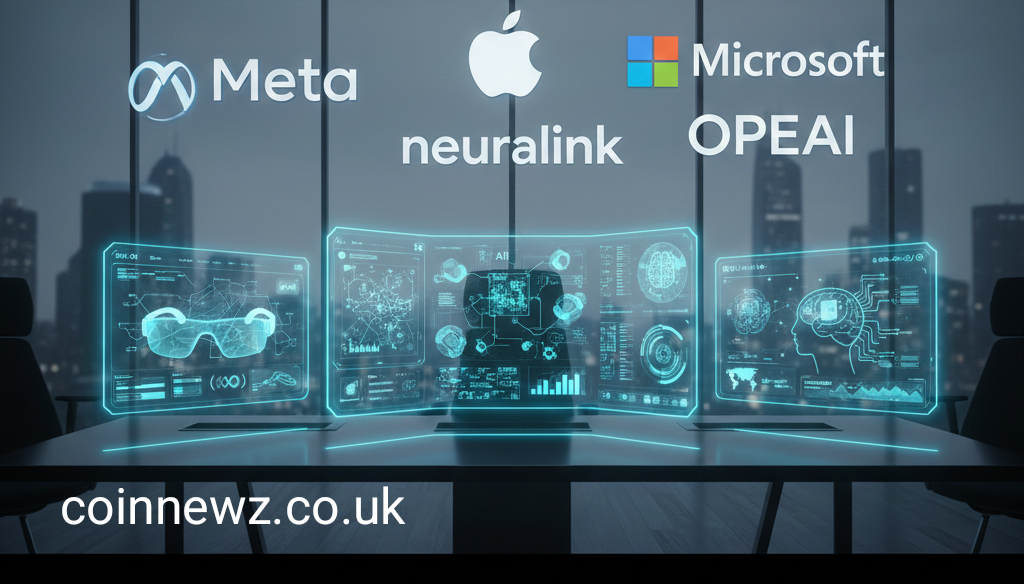
Today, tech giants envision future beyond smartphones by investing billions of dollars into artificial intelligence, wearable technology, spatial computing, augmented reality, voice-first assistants, and even brain-computer interfaces. Companies including Apple, Google, Microsoft, Meta, OpenAI, and Neuralink are exploring technologies designed to make computing more natural, more personal, and less dependent on a handheld screen.
Rather than replacing smartphones overnight, these innovations are expected to gradually integrate into everyday life. Smart glasses could display information directly in front of your eyes, AI assistants may complete complex tasks without opening multiple apps, and ambient computing could allow technology to work quietly in the background without constant interaction.
This transformation represents far more than a hardware upgrade. It signals a shift toward seamless digital experiences where technology becomes almost invisible while remaining constantly available. Consumers in the United States, the United Kingdom, and around the world are beginning to see the first signs of this transition through AI-powered devices, intelligent wearables, and mixed-reality platforms.
In this guide, we’ll explore why tech giants envision future beyond smartphones, which companies are leading the race, the technologies shaping tomorrow, the challenges ahead, and what this evolution could mean for consumers over the next decade.
The Limits of Smartphones
Smartphones remain incredibly powerful devices, but many experts believe they are approaching a maturity stage similar to what personal computers experienced years ago. Annual upgrades often focus on incremental improvements rather than groundbreaking innovation. Faster chips, brighter displays, and improved cameras enhance the user experience, but they rarely redefine how people interact with technology.
One of the biggest limitations is the screen itself. Despite larger displays and foldable designs, users must still look down, tap icons, and navigate dozens of applications to complete everyday tasks. As digital lifestyles become more connected, this interaction model can feel increasingly inefficient.
Battery technology also presents ongoing challenges. While processors have become significantly more efficient, battery capacity has not advanced at the same pace. Users continue to rely on daily charging, creating one of the most common frustrations with modern smartphones.
Privacy concerns represent another growing issue. Smartphones collect vast amounts of personal information, including location history, browsing activity, health metrics, financial transactions, and communication records. As artificial intelligence becomes more deeply integrated into digital services, protecting this information will become even more important.
At the same time, the rise of OpenAI and generative AI has changed user expectations. People increasingly expect conversational assistants capable of answering complex questions, managing schedules, creating content, and automating repetitive tasks instead of simply launching applications.
This shift suggests that future computing may focus less on individual apps and more on intelligent assistants capable of understanding context and completing actions automatically.
Key Drivers of the Shift
Several powerful trends explain why tech giants envision future beyond smartphones and continue investing heavily in next-generation technologies.
Artificial Intelligence Becomes the Primary Interface
Artificial intelligence is rapidly evolving from a software feature into the central operating layer of future computing. Instead of manually searching through menus or switching between applications, users increasingly expect AI to understand natural language and complete tasks instantly.
Modern AI assistants can summarize emails, generate reports, organize calendars, translate conversations in real time, recommend personalized content, and automate workflows. Future systems are expected to become even more proactive by anticipating user needs before they are explicitly requested.
Wearable Technology Continues to Expand
Smartwatches have already demonstrated that many daily interactions no longer require pulling out a phone. Notifications, payments, navigation, health monitoring, and messaging can all be handled directly from wearable devices.
The next evolution includes AI-powered smart glasses capable of displaying contextual information, translating languages instantly, providing navigation overlays, and supporting immersive augmented reality experiences.
Seamless Connectivity and Interaction
The future of computing depends on devices working together effortlessly. Instead of relying on a single smartphone, users may interact with an ecosystem of connected technologies including smart glasses, watches, earbuds, home assistants, connected vehicles, and workplace devices.
This seamless connectivity allows information to follow users naturally across environments without requiring constant manual interaction.
Personalized Experiences Powered by AI
Future digital ecosystems will become increasingly personalized. Artificial intelligence can learn user preferences, daily routines, communication habits, productivity patterns, and entertainment interests to deliver highly customized experiences.
Rather than forcing users to search for information, intelligent systems may proactively provide recommendations, reminders, travel updates, shopping suggestions, and health insights exactly when needed.
Advances in Spatial Computing
Spatial computing combines digital information with the physical world through augmented reality, mixed reality, and advanced sensors. Companies are investing heavily in creating immersive experiences where digital objects appear naturally within real environments.
Instead of staring at flat smartphone screens, users could manipulate virtual workspaces, collaborate with remote colleagues, visualize complex data, or enjoy interactive entertainment within three-dimensional environments.
These innovations illustrate why tech giants envision future beyond smartphones and why the coming decade may represent one of the most significant transformations in consumer technology since the introduction of the smartphone itself.
Major Players and Strategies
The race toward the post-smartphone era is no longer theoretical. The world’s largest technology companies are investing billions of dollars in research, artificial intelligence, wearable computing, and next-generation hardware. While each company has a different strategy, they all share one objective: creating technology that feels more natural, more intelligent, and less dependent on traditional smartphones.
Apple: Building an Intelligent Ecosystem
Apple continues to strengthen its ecosystem rather than abandoning smartphones overnight. The company’s strategy focuses on making every device work together seamlessly through artificial intelligence, cloud services, and wearable technology.
Products like the Apple Watch, AirPods, and spatial computing devices demonstrate Apple’s vision of distributed computing. Instead of relying on a single screen, users can move naturally between multiple connected devices.
Apple is also integrating advanced AI features into its software, allowing devices to become more proactive, context-aware, and personalized. Future innovations may include lightweight smart glasses, enhanced voice assistants, and AI-powered personal productivity tools that reduce dependence on smartphones.
Google: AI at the Center of Everything
Google believes artificial intelligence will become the primary interface for digital experiences. Rather than opening multiple apps, users may simply ask AI assistants to complete tasks.
Google’s investments in generative AI, cloud computing, search innovation, Android, and augmented reality show a long-term commitment to ambient computing. AI is expected to help users write emails, organize schedules, summarize documents, plan trips, translate conversations, and perform complex searches using natural language.
Google also continues developing wearable technologies and mixed-reality experiences that could redefine how people interact with digital information.
Microsoft: Productivity Beyond the Screen
Microsoft is focusing on AI-powered productivity instead of replacing smartphones directly.
Its investments in cloud infrastructure, enterprise AI, mixed reality, and intelligent workplace solutions demonstrate a vision where technology becomes deeply integrated into everyday work.
Through AI assistants, intelligent collaboration tools, and spatial computing, Microsoft aims to reduce repetitive digital tasks while helping users focus on creativity and decision-making.
The company believes future computing will involve multiple connected devices working together instead of relying on one smartphone.
Meta: The Future Through Smart Glasses
Meta has made one of the biggest investments in augmented reality and virtual reality.
The company’s long-term strategy centers on smart glasses that combine communication, entertainment, navigation, AI assistance, photography, and real-world digital overlays.
Instead of checking a smartphone every few minutes, users may simply glance at information displayed through lightweight wearable devices.
Meta also believes AI companions will become part of everyday life, helping users communicate, create content, and access information naturally.
OpenAI: AI That Works Like a Personal Assistant
OpenAI is changing expectations about how people interact with technology.
Instead of tapping applications, users increasingly communicate through natural conversations with AI.
Future AI assistants may manage calendars, book appointments, summarize meetings, create documents, answer questions, generate code, organize research, and automate complex workflows without requiring multiple apps.
This conversational model represents one of the strongest reasons why tech giants envision future beyond smartphones.
Neuralink: Direct Human-Computer Interaction
Neuralink is exploring one of the most ambitious ideas in modern technology—brain-computer interfaces.
Although still in the early stages of development, this technology could eventually allow people to interact with digital systems using neural signals rather than touchscreens or keyboards.
Its initial focus is on helping individuals with serious medical conditions regain communication and movement. Looking further ahead, researchers believe brain-computer interfaces may eventually become another way humans interact with intelligent machines.

Emerging Technologies Shaping the Post-Smartphone Era
Several breakthrough technologies are accelerating the transition toward a future where smartphones are no longer the only gateway to digital life.
Artificial Intelligence Everywhere
AI is becoming the foundation of modern computing.
Instead of functioning as a standalone application, AI is increasingly integrated into operating systems, productivity software, healthcare, education, finance, customer service, and smart homes.
Generative AI enables faster decision-making, content creation, automation, language translation, and personalized recommendations.
Augmented Reality (AR)
Augmented Reality overlays digital information onto the physical world.
Imagine walking through a city while directions appear directly in front of you, shopping with interactive product information, or repairing equipment using visual instructions projected into your field of view.
This technology could significantly reduce reliance on smartphone screens.
Virtual Reality (VR)
Virtual Reality creates immersive digital environments for gaming, education, remote collaboration, healthcare, engineering, and entertainment.
As hardware becomes lighter and more affordable, VR could become a mainstream platform for work and communication.
Mixed Reality (MR)
Mixed Reality combines the strengths of both AR and VR.
Digital objects interact naturally with physical environments, allowing users to collaborate, design products, analyze data, or participate in virtual meetings with remarkable realism.
Many industry experts consider MR one of the most promising computing platforms of the next decade.
Smart Glasses
Smart glasses are among the strongest candidates for reducing smartphone usage.
Future devices may provide:
- Real-time navigation
- Instant translation
- Live notifications
- AI-powered assistants
- Voice communication
- Photography
- Video recording
- Health monitoring
- Context-aware recommendations
Instead of repeatedly looking down at a smartphone, users could receive information naturally while keeping their attention on the world around them.
Brain-Computer Interfaces
Although still experimental, brain-computer interfaces represent one of the most futuristic technologies under development.
Researchers hope these systems will eventually enable faster communication between humans and computers while opening new possibilities for accessibility, healthcare, education, and digital interaction.
Ambient Computing
Ambient computing allows technology to fade into the background.
Rather than actively controlling devices, users simply speak, move, or interact naturally while AI quietly manages connected systems.
Homes, offices, vehicles, wearable devices, and digital assistants may all work together automatically.
Internet of Things (IoT)
Billions of connected devices are expanding the Internet of Things.
Smart homes, connected healthcare devices, intelligent vehicles, industrial sensors, and wearable technology create an ecosystem where information flows continuously between devices.
The smartphone becomes only one part of a much larger connected network.
Edge Computing
Edge computing processes information closer to users instead of relying entirely on distant cloud servers.
This reduces latency, improves privacy, increases speed, and supports real-time AI applications such as autonomous vehicles, smart factories, healthcare monitoring, and immersive digital experiences.
Together, these innovations demonstrate why tech giants envision future beyond smartphones. Rather than replacing phones overnight, they are creating an intelligent ecosystem where artificial intelligence, wearable devices, spatial computing, and seamless connectivity work together to deliver faster, smarter, and more personalized experiences.
Challenges and Barriers
Although tech giants envision future beyond smartphones, the transition will not happen overnight. Smartphones are deeply integrated into everyday life, and replacing them requires overcoming several technical, economic, and social challenges.
High Development Costs
Developing next-generation technologies demands enormous investments in research, manufacturing, artificial intelligence, semiconductor design, and cloud infrastructure. Companies spend billions of dollars each year to create smaller, lighter, and more powerful devices.
For startups, competing against established technology giants is extremely difficult because of the high cost of innovation.
Consumer Adoption
People are comfortable using smartphones because they are familiar, portable, and versatile. Convincing millions of users to adopt smart glasses, AI wearables, or mixed reality devices will take time.
Consumers will only switch if new technology offers a significantly better experience than existing smartphones.
Privacy and Data Security
Future devices will collect even more personal information than smartphones.
AI assistants may understand conversations, wearable devices may monitor health metrics, and smart glasses could continuously process visual information from the surrounding environment.
Technology companies must ensure strong encryption, transparent data policies, and user control over personal information to maintain public trust.
Battery Life and Hardware Limitations
Smaller wearable devices leave less space for batteries.
Advanced AI processing, high-resolution displays, multiple sensors, and constant connectivity require significant power. Improving battery technology remains one of the biggest engineering challenges for the post-smartphone era.
Government Regulations
Artificial intelligence, biometric authentication, facial recognition, and brain-computer interfaces raise important legal and ethical questions.
Governments in the United States, the United Kingdom, and many other countries continue developing regulations covering AI transparency, digital privacy, cybersecurity, and responsible technology development.
Companies will need to comply with evolving regulations while continuing to innovate.
Consumer Implications
The transition beyond smartphones has the potential to transform daily life in ways that extend far beyond communication.
More Natural Digital Experiences
Instead of unlocking phones dozens of times each day, users may interact with AI through voice, gestures, eye tracking, or wearable devices.
Technology could become less distracting and more integrated into everyday activities.
Increased Productivity
AI assistants may automate repetitive tasks such as scheduling meetings, organizing emails, writing reports, summarizing documents, managing reminders, and planning travel.
This allows users to focus on creativity, decision-making, and collaboration instead of routine digital work.
Smarter Healthcare
Wearable technology will likely play a major role in preventive healthcare.
Future devices may continuously monitor heart rate, sleep quality, blood pressure, physical activity, stress levels, and other health indicators while providing early warnings for potential medical issues.
Healthcare professionals may also receive more accurate real-time data to support personalized treatment.
Better Accessibility
Emerging technologies can significantly improve accessibility for people with disabilities.
AI-powered voice assistants, real-time captioning, language translation, gesture recognition, eye tracking, and brain-computer interfaces could make digital services more inclusive than ever before.
Personalized Experiences
Artificial intelligence will continue learning user preferences to provide highly customized recommendations.
Whether shopping online, consuming entertainment, receiving health advice, or managing finances, AI systems may deliver information based on individual habits, interests, and goals.
Privacy, Security, and Ethical Considerations
As technology becomes more intelligent, protecting users becomes increasingly important.
Responsible Artificial Intelligence
AI systems should provide accurate, transparent, and unbiased information while respecting user privacy.
Developers must reduce harmful biases, improve reliability, and clearly explain how AI-generated decisions are made.
Data Ownership
Users are becoming more aware of how much personal information digital platforms collect.
Future ecosystems should give individuals greater control over their own data, including how it is stored, shared, and deleted.
Cybersecurity
As billions of connected devices communicate with each other, cybersecurity becomes more critical.
Manufacturers must strengthen authentication methods, encrypt communications, and regularly update software to reduce security risks.
Ethical Innovation
Technologies such as facial recognition, biometric authentication, and brain-computer interfaces require careful ethical consideration.
Technology companies, governments, researchers, and society must work together to establish standards that protect human rights while encouraging innovation.
Market Outlook
The technology industry is entering one of its most significant periods of transformation since the introduction of the smartphone.
Analysts expect artificial intelligence, wearable computing, augmented reality, mixed reality, cloud computing, and intelligent digital ecosystems to grow rapidly throughout the coming decade.
Instead of a single revolutionary device replacing smartphones overnight, consumers are more likely to experience a gradual evolution.
Smartphones will increasingly work alongside smart glasses, wearable devices, AI assistants, connected vehicles, intelligent homes, and spatial computing platforms.
Competition among Apple, Google, Microsoft, Meta, OpenAI, and Neuralink will continue accelerating innovation while creating entirely new categories of consumer technology.
Businesses are also preparing for this shift by investing in AI-powered customer service, immersive collaboration tools, automation, edge computing, Internet of Things (IoT) solutions, and personalized digital experiences.
For consumers in the United States and the United Kingdom, the next decade may bring technology that is faster, smarter, more intuitive, and more deeply integrated into daily life than ever before.
Ultimately, tech giants envision future beyond smartphones not because smartphones are disappearing tomorrow, but because computing itself is evolving. Artificial intelligence, seamless connectivity, wearable technology, spatial computing, and intelligent ecosystems are reshaping how people interact with the digital world. The post-smartphone era is no longer a distant concept—it has already begun.
Key Takeaways
- Tech giants envision future beyond smartphones by investing heavily in artificial intelligence, wearable technology, smart glasses, and spatial computing.
- Apple, Google, Microsoft, Meta, OpenAI, and Neuralink are leading innovation in the post-smartphone era.
- AI assistants are expected to become the primary way users interact with digital technology.
- Smart glasses, augmented reality, mixed reality, and ambient computing could reduce dependence on handheld screens.
- Privacy, cybersecurity, ethical AI, and battery technology remain key challenges.
- Smartphones are unlikely to disappear soon, but they will increasingly become part of a larger connected ecosystem.
- Consumers in the USA, UK, and worldwide can expect more personalized, intelligent, and seamless digital experiences over the coming decade.
FAQ’s
What will replace the smartphone?
There is unlikely to be a single device that completely replaces the smartphone. Instead, experts expect a combination of AI-powered smart glasses, wearable devices, voice assistants, mixed reality headsets, and ambient computing to reduce dependence on smartphones over time.
What will be the next big thing after smartphones?
Artificial intelligence is widely considered the next major technology revolution. Combined with spatial computing, augmented reality, smart glasses, and wearable technology, AI will create more natural and personalized digital experiences.
What is the future for smartphones?
Smartphones are expected to remain important for many years, but their role will gradually change. Rather than being the center of every digital interaction, they may become part of a connected ecosystem that includes AI assistants, wearables, and intelligent devices.
What will a phone look like in 2050?
While no one can predict the future with certainty, future phones could be far smaller, more intelligent, and deeply integrated with AI. Flexible displays, holographic interfaces, advanced biometric security, and seamless interaction with wearable devices may become common.
What is the most hacked phone brand?
No phone brand is permanently the “most hacked.” Popular brands such as Apple and Android manufacturers are frequent targets simply because they have large user bases. Keeping devices updated, using strong passwords, enabling multi-factor authentication, and downloading apps only from trusted sources greatly improves security.
What does Bill Gates say will replace the smart phone?
Bill Gates has discussed the potential of next-generation wearable technologies and other innovations that could eventually reduce reliance on smartphones. However, he has not stated that a single device will immediately replace smartphones. Most experts believe the transition will happen gradually.
Why is Gen Z obsessed with iPhones?
Many Gen Z users prefer iPhones because of their seamless ecosystem, camera quality, long software support, privacy features, social influence, and popular services like iMessage and FaceTime. Brand reputation and integration with other Apple devices also contribute to their popularity.
What will eventually replace the iPhone?
The iPhone is more likely to evolve than disappear overnight. Future Apple innovations—including AI-powered assistants, smart glasses, wearable devices, and spatial computing—could gradually take over many of the tasks currently performed by smartphones.
Final Thoughts:
The smartphone transformed the digital world, but innovation never stands still. Today, tech giants envision future beyond smartphones by creating technologies that are more intelligent, connected, and intuitive than ever before. Artificial intelligence is becoming the foundation of this transformation, while wearable devices, spatial computing, augmented reality, and ambient computing are redefining how people interact with technology.
Rather than replacing smartphones overnight, the industry is building an ecosystem where multiple intelligent devices work together seamlessly. This gradual evolution will give consumers greater convenience, improved productivity, stronger personalization, and entirely new ways to communicate, work, learn, and create.
For businesses, developers, and consumers alike, the post-smartphone era represents one of the most exciting opportunities in modern technology. The companies that successfully combine AI, privacy, security, and user-focused innovation will help shape the next generation of digital experiences. As these technologies continue to mature, the vision that tech giants envision future beyond smartphones is steadily becoming a reality.
Meta Description:
Discover why tech giants envision future beyond smartphones through AI, smart glasses, wearables, and spatial computing. Explore the future of digital technology.